Mpila-Camp
enquiriesFrom R994 per person per night. Self-catering, Big5 game park, Game Drives & Guided Bush Walks Sleep inside Africa's oldest game reserve with nothing between you and the bush but a canvas wall and a mosquito net. This is not a hotel. This is the real thing.
Mpila Camp
Mpila Camp sits unfenced in the heart of the iMfolozi game park, the southern sector of Hluhluwe-iMfolozi Park where white rhino conservation was born. Thirty-four self-catering units — safari tents, chalets, and family cottages — built on a ridge above the White uMfolozi River valley, where buffalo herds cross at dawn and hyena whoop through the camp after dark.
From R994 per person per night. You cook your own food on your own braai. You sleep inside Africa's oldest game reserve with nothing between you and the bush but a canvas wall and a mosquito net. This is not a hotel. This is the real thing.


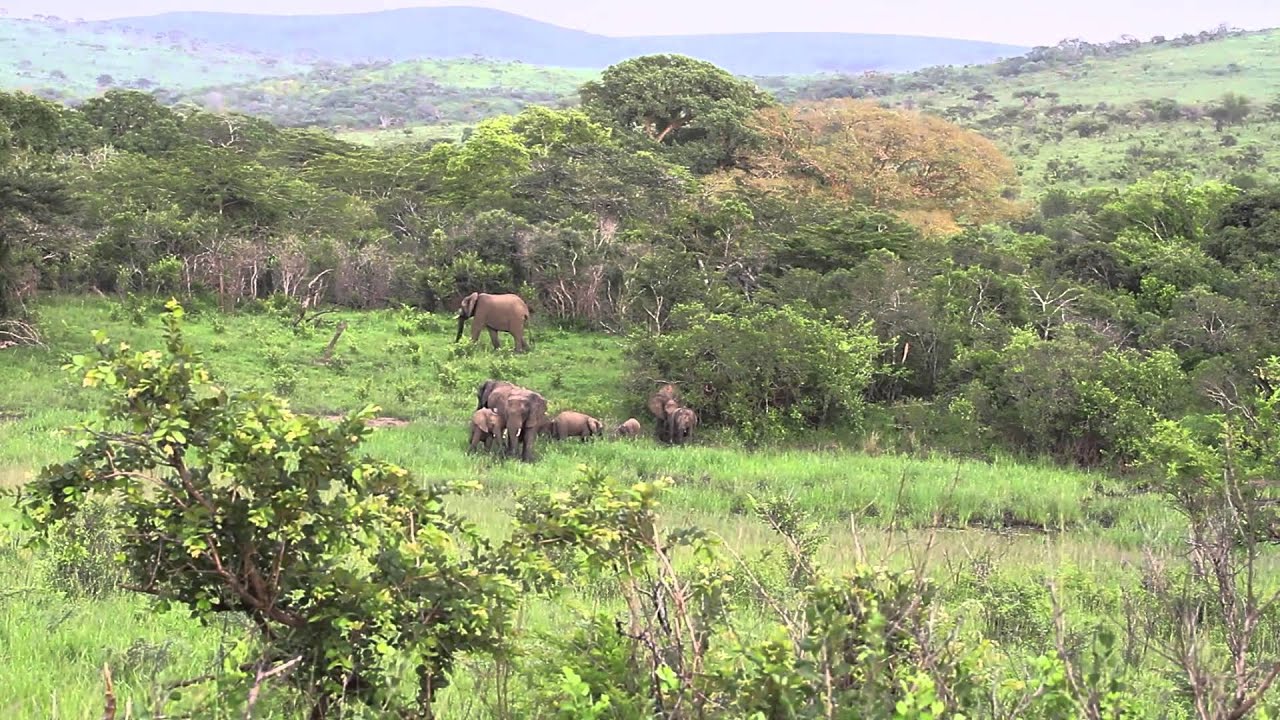


Inside the iMfolozi Game Park at Mpila Camp
The generator shuts down at ten. After that, the only light is the stars, candles, lanterns and whatever fire you've got going on your braai. That's when Mpila Camp tells you where you are. Hyenas move threw your camp or whoop from the drainage lines below the ridge. Something heavy moves through the acacia thornveld just beyond the fence line — except there is no fence line.
Mpila is completely unfenced, leaving nothing more than a wooden deck and a mosquito net between you and the bush. That openness runs through the entire camp, from the reception and shop to the safari tents tucked beneath Black Monkey-thorn acacias. Even the brick-under-thatch chalets, whose high ceilings offer a cool escape from the intense October-to-April lowveld heat, sit wide open to the wild.
This is the iMfolozi game park section of Hluhluwe-iMfolozi Park, 93,000 hectares of rolling thornveld and river valley where the southern white rhino was pulled back from extinction in the 1950s. Operation Rhino started here. The rhino you'll see grazing within 500 meters of your chalet at dawn are the descendants of the animals that repopulated the world.
Mpila Camp is the second-largest camp in the park. Thirty-four units — two-bed and four-bed safari tents on raised decks, two-bed chalets, five-bed chalets, seven-bed family cottages with a cook on hand. All self-catering. All serviced daily. All built on a high ridge that commands the White uMfolozi River valley below.
No restaurant. No pool. No Wi-Fi. Generator and solar power from early morning until ten at night. The running water is borehole, its fine for cooking and bathing, but you should bring your own for drinking. A curio shop that sells firewood, charcoal, basic supplies, cold drinks, and unleaded petrol. ( NOTE on firewood, do not bring in wood at all )
What you get instead of hotel amenities is something no hotel can offer: you sleep inside a Big 5 game reserve with the door of your tent between you and whatever walks through the camp at three in the morning. This is not high end glamping, its more like 3 stars, dated accommodation, for people who want to total disconnect from the constant contact we live in now days. Not sure about you, but it drives me crazy some times, always being contactable.
Need a break come here..


Mpila Camp Accommodation — Self-Catering Tents, Chalets & Cottages
Five unit types. All self-catering with fully equipped kitchens, en-suite bathrooms, daily servicing, and private braai facilities. All inside the reserve — you walk out of your tent and you're in Big 5 country. Ezemvelo KZN Wildlife built these camps for people who want to be in the bush, not next to it. Authentic. Functional. The real thing.
2-Bed Safari Tent
From R994 per person per night — Max 2 adults, sharing
• Self-catering, sleeps 2
• Single beds, en-suite bathroom
• Fully equipped kitchen
• Towels & linen, serviced daily
• Braai / fire / barbecue facilities
• Plug points, mosquito nets
• Raised on a wooden deck for safety
Tents sit in a grove of Black Monkey-thorn acacia (Acacia burkei) with shade protection above. The dining area connects to each tent by a wooden boardwalk. Open plan. One bush tent. Built off the ground on decks — stay on the decks after dark.
4-Bed Safari Tent
From R994 per person per night — Max 4 adults, sharing
• Self-catering, sleeps 4
• Single beds, en-suite bathrooms
• Fully equipped kitchen
• Towels & linen, serviced daily
• Braai / fire / barbecue facilities
• Plug points, mosquito nets
Two tents separated by a shared deck with the kitchen and dining area between them. Each tent has its own bathroom. This is real bush camping with proper facilities — canvas walls, raised decks, the sounds of the iMfolozi at night.
2-Bed Chalet
From R1,062 per person per night — Max 2 adults, sharing
• Self-catering, sleeps 2
• En-suite bathroom
• Fully equipped kitchen
• Single beds, mosquito nets
• Towels & linen, serviced daily
• Braai / fire / barbecue facilities
Brick under thatch. High ceilings keep these chalets cool even in the lowveld heat — no air conditioning needed. Rustic, old-world style. Not new. Not polished. Inside the reserve, where the animals are.
5-Bed Chalet
From R1,073 per person per night — Max 5 adults, min 4 people
• Self-catering, sleeps 5
• 2 bedrooms (one with 2 beds, one with 3 beds)
• En-suite bathroom (bath with shower)
• Fully equipped kitchen, lounge & dining room, open plan
• Patio with braai / barbecue area
• Towels & bedding supplied, serviced daily
• Plug points, TV, mosquito nets, fans
No air conditioning in this park — but you won't need it. The thatch and high ceilings do the work. Ideal for a family or two couples sharing.
7-Bed Cottage
From R1,130 per person per night — Max 7 adults, min 5 people
• Self-catering, sleeps 7
• 3 bedrooms, en-suite bathrooms
• Combination of double and single beds
• Fully equipped kitchen
• Lounge, dining room, large veranda
• Fans, TV, plug points, mosquito nets
• A cook on hand to prepare food supplied by guests and do the daily cleaning
Three-bedroomed thatch cottage. Simple layout but very nice. Ideal for large families or groups of friends. The cook service is what sets this unit apart — you bring the food, they handle the cooking and cleaning. You just sit on the veranda and watch the bush.
What Happens After Dark at Mpila Camp
After dark, spotted hyenas emerge from the drainage lines and investigate the camp perimeter. You hear them before you see them — a whooping call that eerily carries across the river valley, one animal to the next, clan members talking to each other in a language that predates every human language by millions of years.
Genets hunt in the rafters above the outdoor cooking areas. Completely unbothered by the humans below them. A mongoose family might work the edge of your braai stand looking for scraps. Monkeys — you'll see them during the day, and you'll learn to keep your windows closed and your food out of sight. They're not aggressive. They're opportunistic. An open fruit bowl is an invitation.
"The camp is not fenced. Animals do come into camp at night. Stay on the decks after dark. Do not walk off the paths. The bush is not a zoo — it does not operate on your schedule."
This is what you're paying for. Not the chalet. Not the kitchen. The privilege of sleeping inside a wild place where the food chain still functions without human management.Where the rhino you photographed at sunset might be the same rhino whose tracks you find outside your tent at sunrise.
Mpila Camp is where the iMfolozi wilderness trails begin — the four-day walking safaris that take you into the deepest section of the reserve, sleeping under stars with nothing but a guide and a rifle between you and whatever the bush sends your way. You don't have to do the trails to feel that energy. You just have to sit on your deck after the generator dies and listen.
Activities at Mpila Camp — Game Drives, Walks & Wilderness Trails
You're already inside the reserve. That changes everything. You don't drive an hour to get to the bush — you walk out of your tent and the bush is there. But if you want a guide, Mpila offers three ways to go deeper.
4×4 Game Drives
Three-hour game drives in open 10-seater and 22-seater vehicles with a resident guide. Book at reception on arrival — first come, first served. The guide knows the roads, the waterholes, the rhino grazing patterns, and where the wild dog pack was last seen. Drives are scheduled to get you back in time to cook your dinner.
Guided Safari Walks
Three-hour walking safaris with a field guide. Limited to eight people. No children under 12. This is the real deal — you walk in the bush on foot with an armed guide, learning to read tracks, identify birds, and move through Big 5 territory the way people have moved through it for thousands of years. Early morning and late afternoon walks are the most rewarding.
Self-Drive Game Viewing
The park speed limit is 40 km/h, but the best game viewing speed is below 20 km/h. You drive yourself through the iMfolozi section — the Sontuli Loop on the uMfolozi River is one of the finest game drive roads in KwaZulu-Natal. Reduce dust, approach animals without startling them, and stop at the two picnic sites (Sontuli and Mbondwe) with ablutions and braai facilities.Sample text.
Full-Day Safaris with a Tour Operator
BEST OPTION TO SEE THE MOST- Is a full-day guided safari while staying inside the park? Requesting a full-day safari. We'll arrange a professional guide to collect you from Mpila and take you deep into both the iMfolozi and Hluhluwe sections — the river loops, the ridgelines, the secret waterholes that the self-drive maps don't show you.
Also available: Multy-Day Safaris with a 25-year veteran Safari Company, who knows exactly where the light falls and where the animals will be for that day, Because they where in the park yesterday and most or our guides have grown up in this area and in the game parks in the KZN regon.
Directions to Mpila Camp
Mpila Camp is accessed through Nyalazi Gate, the southern entrance to Hluhluwe-iMfolozi Park. From the gate, it's 19 km / 45 minutes to the camp — allow extra time because wildlife on the roads will slow you down.
From Durban (approx. 250 km, 3–3½ hours)
- Travel north from Durban on the N2, following signs towards Empangeni, Richards Bay and Mtubatuba.
- Continue past Richards Bay and take the R618 Mtubatuba/Nongoma turn-off.
- Turn onto the R618 towards Nongoma and Hlabisa.
- Continue west on the R618 for approximately 27 km.
- Look for the signposted entrance to Nyalazi Gate on your left.
- Supply your reservation reference number at the gate.
- At the T-junction inside the gate, take the road to the left for Mpila Camp (right goes to Hilltop Camp in the Hluhluwe section).
- Mpila Camp is 19 km from the gate — approximately 45 minutes at park speed.
From the N2 (Southbound)
Cross the bridge over the iMfolozi River on the N2. The turn-off is 3 km north of the Mtubatuba turn-off. Follow the signpost to the tarred Nongoma road (R618) for 27 km, then turn left to Nyalazi Gate.H3: From the N2 (Northbound) The signpost is opposite the Mtubatuba turn-off on the right. Take the tarred Nongoma road (R618) for 27 km, then turn left to Nyalazi Gate.
From Ulundi / Vryheid (via Cengeni Gate)
Take the gravel road to Cengeni Gate. From Cengeni Gate to Mpila Camp is 23 km / approximately 1 hour. This route is mostly gravel and best for vehicles with higher clearance.
From St Lucia Nyalazi Gate is approximately 54 km from St Lucia
Allow 1 hour to the gate plus 45 minutes from the gate to camp. Important: Enter "Nyalazi Gate, Hluhluwe-iMfolozi Park" into your navigation — not just the camp name. Do not allow navigation software to direct you through unofficial entrances or minor rural roads. You must reach the gate before closing time. No driving without escort after gate closing. Nearest town with full services: Mtubatuba, 48 km away.
Michael van Eeden
Born in Africa. Raised on the shores of Lake Kariba, Zimbabwe, at his grandfather's Bumi Hills Hotel — where a small family of elephants were his closest childhood neighbours.
His father was a bush doctor who built hospitals across remote Africa, the Caribbean, and rural South Africa.40+ years of landscape and wildlife photography — film from age one through digital. 20+ years of overlanding Central and Southern Africa in a purpose-built Land Rover Defender, off-grid 4x4.
16 years as a Big 5 safari and accommodation specialist based in St Lucia, KwaZulu-Natal. Passages to the Bahamas and the Swahili Coast — Mozambique to Zanzibar. SATSA member GA0134. Virtual Tours & Safaris is the booking operation — 16 years of transaction history, handling bookings and receiving payment.
No office. No desk. Just Africa, the bush, the open sea, and a camera. He is an affiliate marketer who specializes in adventure travel and eco-tourism. He does not own safari trucks. He does not own a B&B.
He carries no overhead. The smart position is to be the marketer, not the operator — 16 years of product knowledge and a lifetime of African experience, working for you.
Frequently Asked Questions About Mpila Camp
How much does Mpila Camp accommodation cost?
Mpila Camp accommodation price ranges from R994 per person per night for a 2-bed or 4-bed safari tent (sharing) to R1,130 per person per night for a 7-bed cottage. All units are self-catering with fully equipped kitchens, en-suite bathrooms, and daily servicing. Conservation fees are additional — R320 per adult for international visitors, R160 per adult for SA residents, per day. Overnight guests pay the daily fee too. Check availability and get a quote → (/contact-us/)
How do I book Mpila Camp?
Mpila Camp booking is handled through Virtual Tours & Safaris. Fill in the booking enquiry form (/contact-us/) or call +27 67 400 1573 (tel:+27674001573). We have 16 years of booking history with Ezemvelo KZN Wildlife and can confirm availability and rates quickly. SATSA member GA0134.
What is the best way to get to Mpila Camp?
The direction to Mpila Camp is via Nyalazi Gate, the southern entrance to Hluhluwe-iMfolozi Park. From the N2, take the R618 Mtubatuba/Nongoma turn-off and travel 27 km to Nyalazi Gate. From the gate, Mpila Camp is 19 km / 45 minutes. GPS: 31°51'44.62"E 28°18'36.36"S. The nearest town with full services is Mtubatuba, 48 km away.
Is Mpila Camp fenced?
No. Mpila Camp is unfenced. Animals — including hyena and occasionally elephant — move through the camp at night. Stay on the decks and paths after dark. Do not walk off the designated areas. The camp is built on a ridge in open acacia thornveld in the heart of the iMfolozi game park.
Does Mpila Camp have a restaurant or shop?
No restaurant. Mpila Camp is strictly self-catering. A curio shop at reception sells firewood, charcoal, basic supplies, cold drinks, beer, wine, and unleaded petrol. It is open 07:00–18:00 daily. Stock up on groceries in Hluhluwe town or St Lucia before entering the park — there is no proper shopping inside the reserve.
What are the gate times at Hluhluwe-iMfolozi Park?
Gate times are 05:00–19:00 from November to February (summer) and 06:00–18:00 from March to October (winter). You must reach the gate before closing time. Late entry is charged at R500 per vehicle and must be arranged with the resort before 16:30. No driving without escort after gate closing.
When is the best time to visit Mpila Camp?
The best time to visit Mpila Camp is May to September — the dry winter months when vegetation is thin, water sources are concentrated, and game viewing is at its best. The golden winter light from 6am to 9am and 4pm to 6pm is ideal for photography. Summer (November to February) brings rain, thick bush, and lush green landscapes but makes game spotting harder.
What animals will I see at Mpila Camp?
The iMfolozi game park section around Mpila Camp is home to the Big 5 — white rhino, buffalo, elephant, lion, and leopard. White rhino are commonly seen grazing within 500 metres of the camp at dawn. The iMfolozi section is also one of the best places in the park to see African wild dog. Over 80 mammal species and 300+ bird species live in Hluhluwe-iMfolozi Park