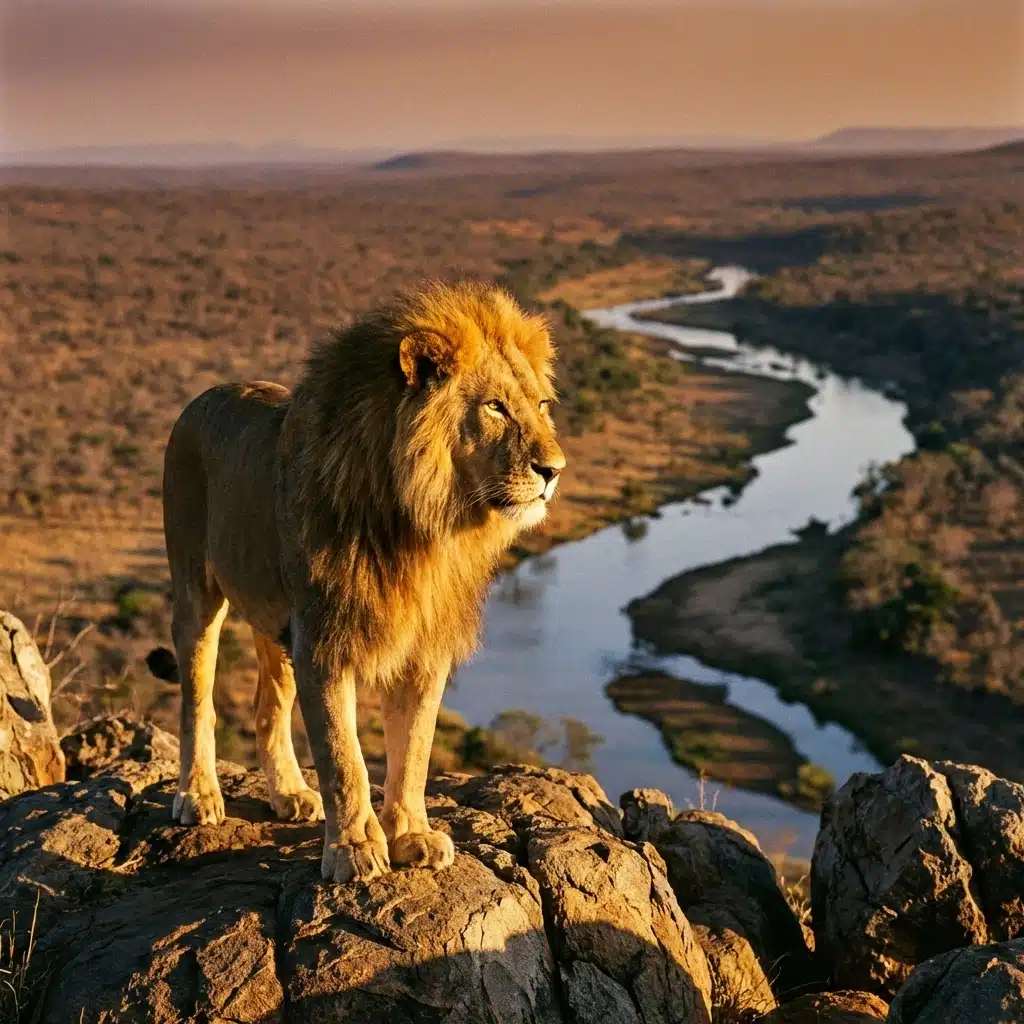
Africa's Big 5 Game Animals
Hluhluwe iMfolozi Big 5 Status Overview
• Lion: 150-200 individuals across both sections, strongest populations along Black Mfolozi River
• Leopard: Estimated 80-120 individuals, most active around Hluhluwe section rocky outcrops
• White Rhino: 1,200+ individuals, world's largest population thanks to Operation Rhino since 1961
• Elephant: 600+ individuals in family groups, concentrated in Hluhluwe section valleys
• Cape Buffalo: 4,000+ individuals in multiple herds, year-round residents throughout both sections
• Total Park Size: 96,000 hectares combining Hluhluwe and iMfolozi sections
• Best Viewing Times: May-September dry season, 06:00-10:00 and 15:00-18:00 daily
The Big 5 Legacy and Hluhluwe iMfolozi Heritage
The term "Big 5" originated during Africa's colonial hunting era, referring to the five most dangerous animals to hunt on foot: lion, leopard, rhinoceros, elephant, and Cape buffalo. These species earned their designation not through size but through their ability to charge hunters and fight back when wounded.
Today, Hluhluwe iMfolozi Park represents the complete opposite of this hunting legacy. Established in 1895, this 96,000-hectare reserve became Africa's oldest proclaimed nature reserve and transformed from a hunting ground into a conservation sanctuary. The park's two sections: Hluhluwe in the north and iMfolozi in the south: connected by a corridor, now protect all Big 5 species in their natural habitat.
The park's elevation ranges from 80 meters along the White Mfolozi River to 590 meters on the surrounding hills, creating diverse ecosystems that support different Big 5 populations across thornveld, grassland, and riverine forest habitats.
African Lion Territory in Hluhluwe iMfolozi
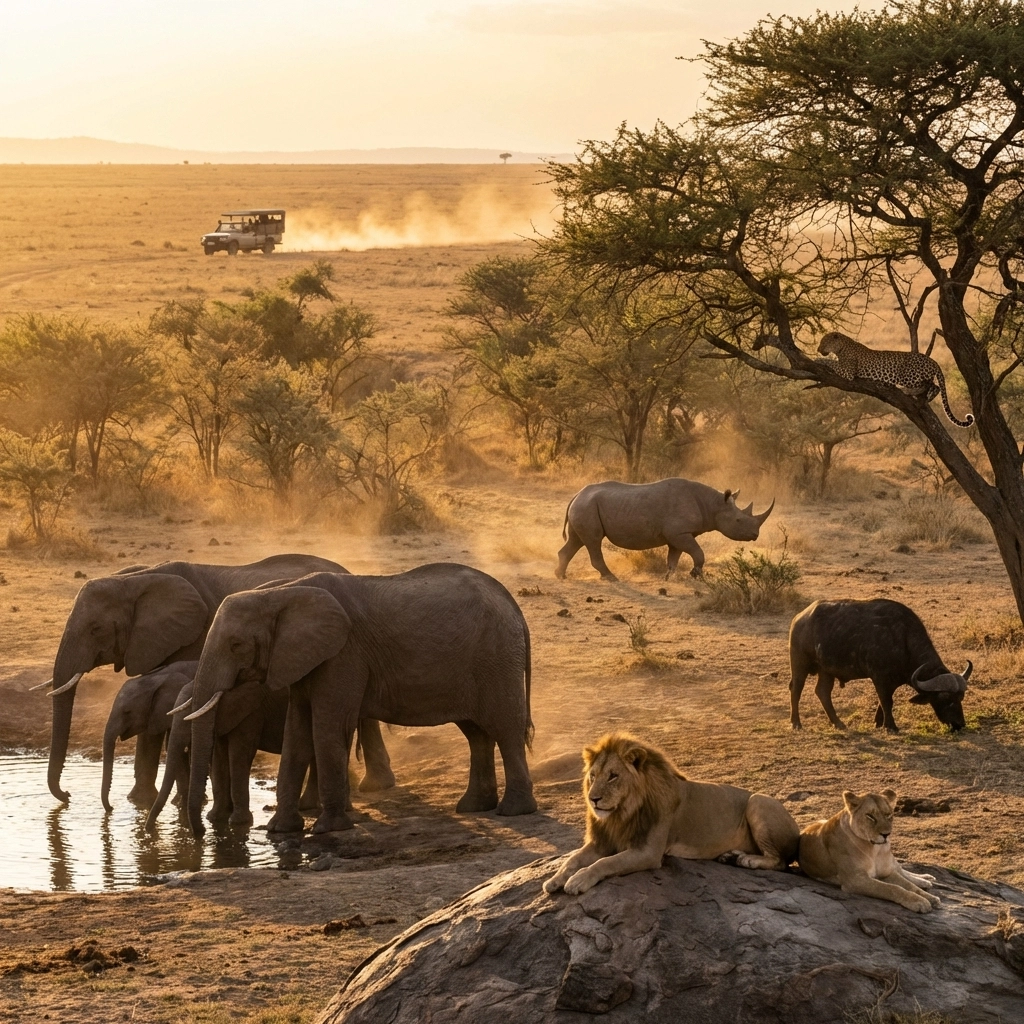
Hluhluwe iMfolozi maintains between 150-200 lions distributed across both park sections, with the highest concentrations along the Black Mfolozi River system in the iMfolozi section. These apex predators organize into prides of 8-15 individuals, defending territories spanning 15-25 square kilometers.


The lions demonstrate distinct behavioral patterns specific to Hluhluwe iMfolozi's landscape. During dry season months from May through September, prides concentrate near the White Mfolozi, Black Mfolozi, and Hluhluwe rivers where prey animals gather. The rocky koppies throughout the park serve as territorial markers and denning sites for cubs during the October-March birthing season.
Male lions in Hluhluwe iMfolozi typically weigh 180-220 kilograms, while females average 120-150 kilograms. The park's lion population shows genetic diversity benefits from periodic introductions from other Kwazulu-Natal reserves, maintaining healthy breeding cycles without inbreeding concerns.
Prime lion viewing locations include the Sontuli Loop Road near Mpila Camp, where morning drives between 06:00-09:00 frequently encounter prides moving to shade. The Nyalazi area in Hluhluwe section offers excellent afternoon sightings around 16:00-18:00 when lions begin evening hunts.
African Elephant Families in Hluhluwe iMfolozi
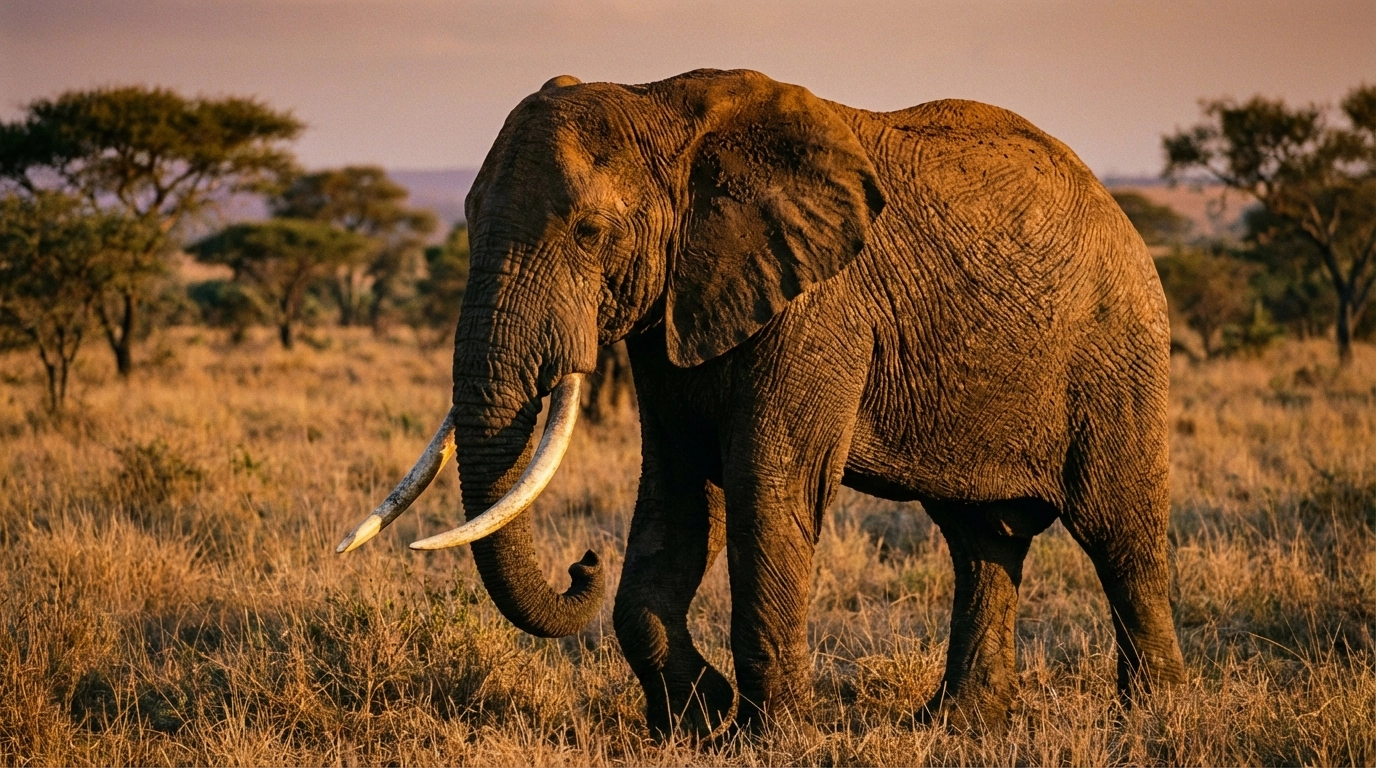
The park supports 600+ African bush elephants organized into matriarchal family groups ranging from 8-25 individuals. These herds concentrate primarily in the Hluhluwe section's valleys and drainage systems, where year-round water sources and diverse vegetation support their daily 150-200 kilogram food requirements.
Hluhluwe iMfolozi elephants exhibit seasonal movement patterns between the two park sections connected by the 7-kilometer corridor under the R618 highway. During dry months, families migrate toward the White uMfolozi River system, while wet season distribution spreads across higher elevation areas around Hilltop Camp and the northern boundary regions.


Adult bulls reach 3.5-4.0 meters in height and weigh 4,000-6,000 kilograms, while females average 2.5-3.0 meters and 2,500-3,500 kilograms. The park's elephant population shows healthy age distribution with regular births during October-December rainy seasons.
These intelligent mammals demonstrate complex social behaviors specific to Hluhluwe iMfolozi's landscape. Family groups create daily movement circuits between water sources, feeding areas in marula groves, and mud wallowing sites along riverbanks. The elephants' memory maps span generations, with matriarchs guiding families along traditional routes established over decades.
The African elephant conservation efforts in Hluhluwe iMfolozi include human-elephant conflict mitigation through community outreach programs and agricultural support for neighboring communities.
Cape Buffalo Herds at Hluhluwe iMfolozi
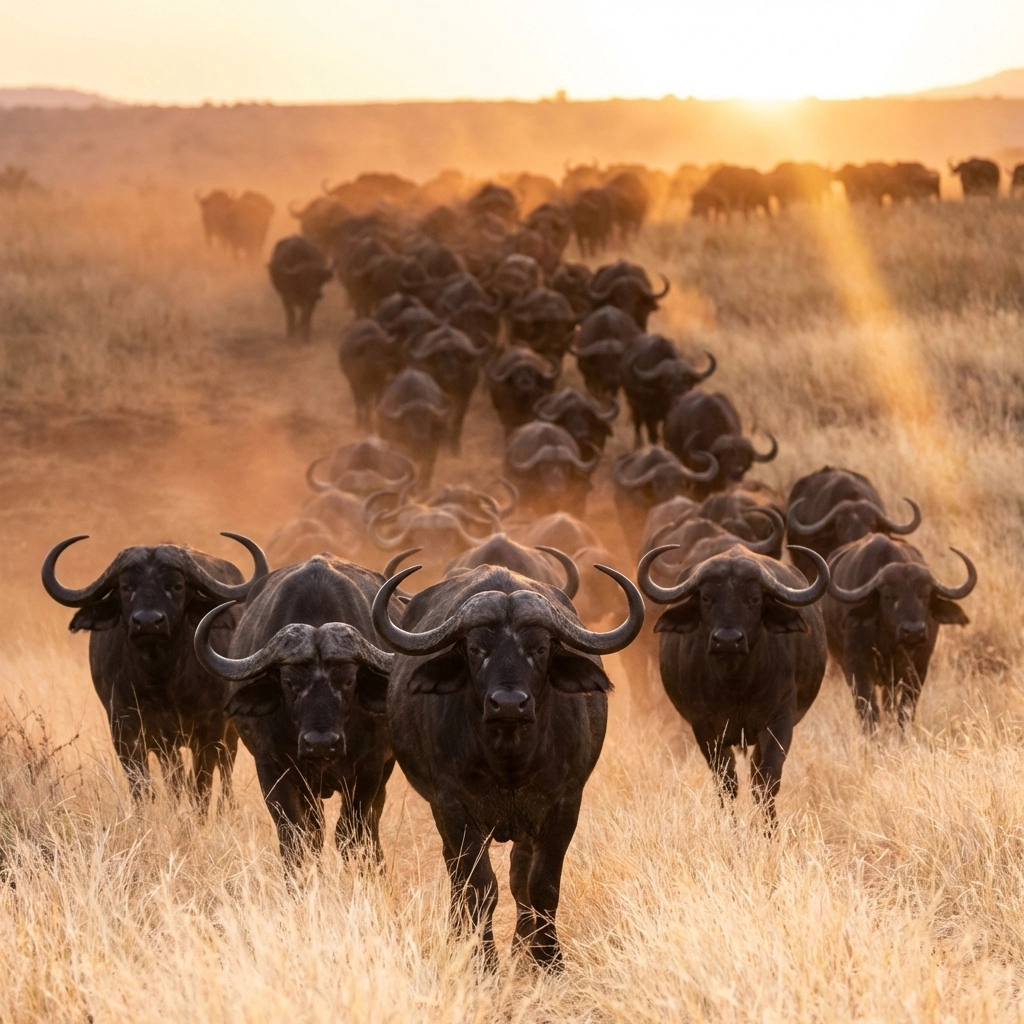
The Cape buffalo represent the most numerically successful Big 5 species in Hluhluwe iMfolozi, with populations exceeding 4,000 individuals across both park sections. These massive bovids form Africa's most dangerous herds, with bulls weighing up to 800 kilograms and demonstrating unpredictable charging behavior when threatened.
The buffalo population organizes into breeding herds of 100-400 individuals during wet months, fragmenting into smaller bachelor groups and family units during dry season concentration around permanent water sources. The open grasslands of iMfolozi section support the largest herds, while Hluhluwe section hosts smaller groups adapted to the more wooded terrain.


Buffalo in Hluhluwe iMfolozi display distinct daily movement patterns, feeding during cooler morning hours from 05:00-10:00, resting in shade during midday heat, and returning to evening grazing sessions from 15:00-19:00. Their preferred grass species include red grass, buffalo grass, and wire grass varieties abundant throughout the park's thornveld ecosystem.
The park's buffalo serve as crucial prey species for lion prides, with successful hunts typically requiring coordinated pride efforts targeting young, elderly, or isolated individuals. These interactions provide visitors with dramatic predator-prey dynamics during morning and evening game drives.
Leopard Populations and Hluhluwe iMfolozi Habitat
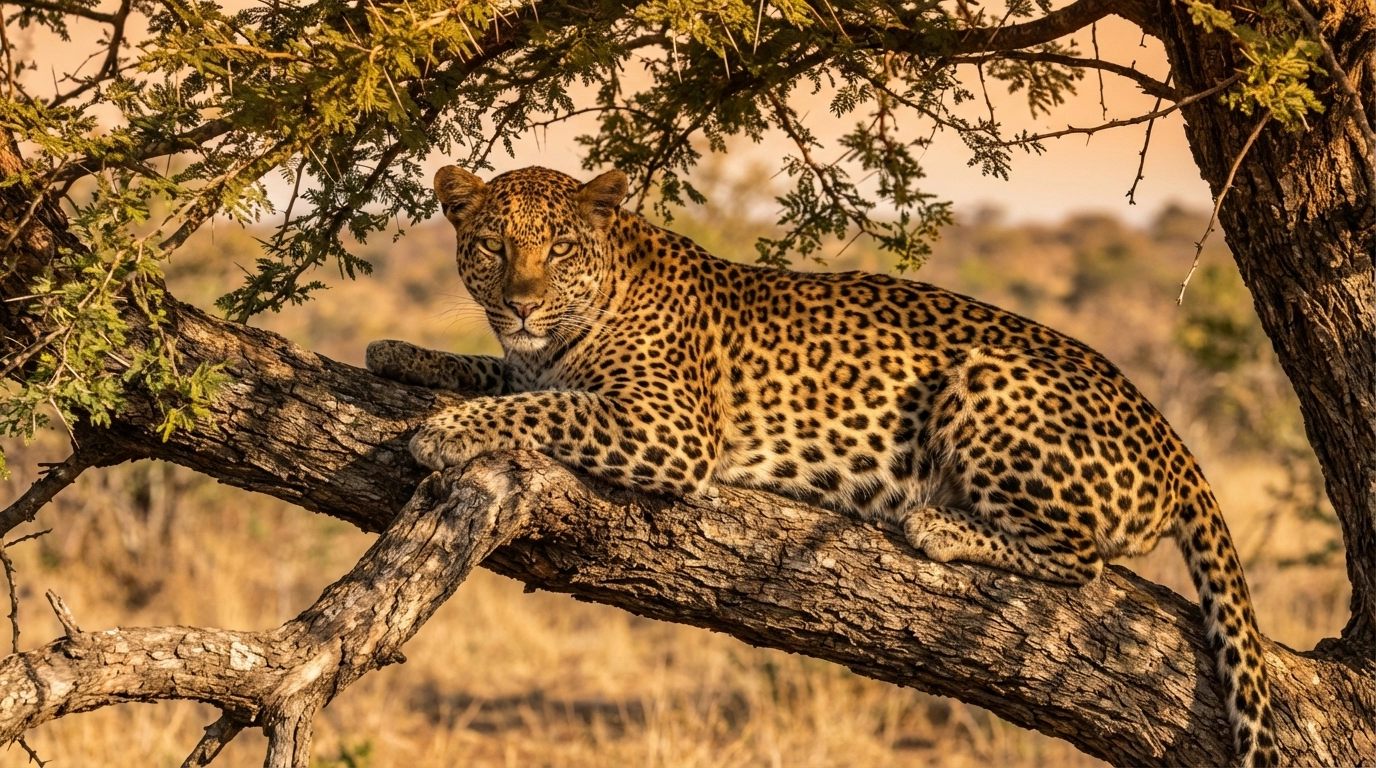
The secretive leopard population in Hluhluwe iMfolozi numbers approximately 80-120 individuals, making this one of Kwazulu-Natal's most successful leopard conservation areas. These solitary cats prefer the rocky outcrops and dense riverine vegetation throughout both park sections, with particularly strong populations in the northern Hluhluwe hills.
Leopards in the park demonstrate remarkable adaptability to the thornveld environment, utilizing large marula, fever, and sycamore fig trees for caching kills away from lion competition. Adult males establish territories of 8-12 square kilometers, while females maintain smaller 3-6 square kilometer ranges centered around suitable denning sites.
The park's leopard viewing success requires patience and early morning dedication. The Hilltop Camp area provides rocky terrain where leopards hunt rock dassies during dawn hours. The Centenary Centre region offers riverine forest where these cats target impala and bushbuck during late afternoon sessions.
Research conducted by Ezemvelo KZN Wildlife indicates Hluhluwe iMfolozi leopards average 60-80 kilograms for males and 35-45 kilograms for females, with lifespans reaching 12-15 years in the protected environment. The population remains stable due to abundant prey and minimal human-wildlife conflict within park boundaries.


White Rhino Recovery Success in Hluhluwe iMfolozi
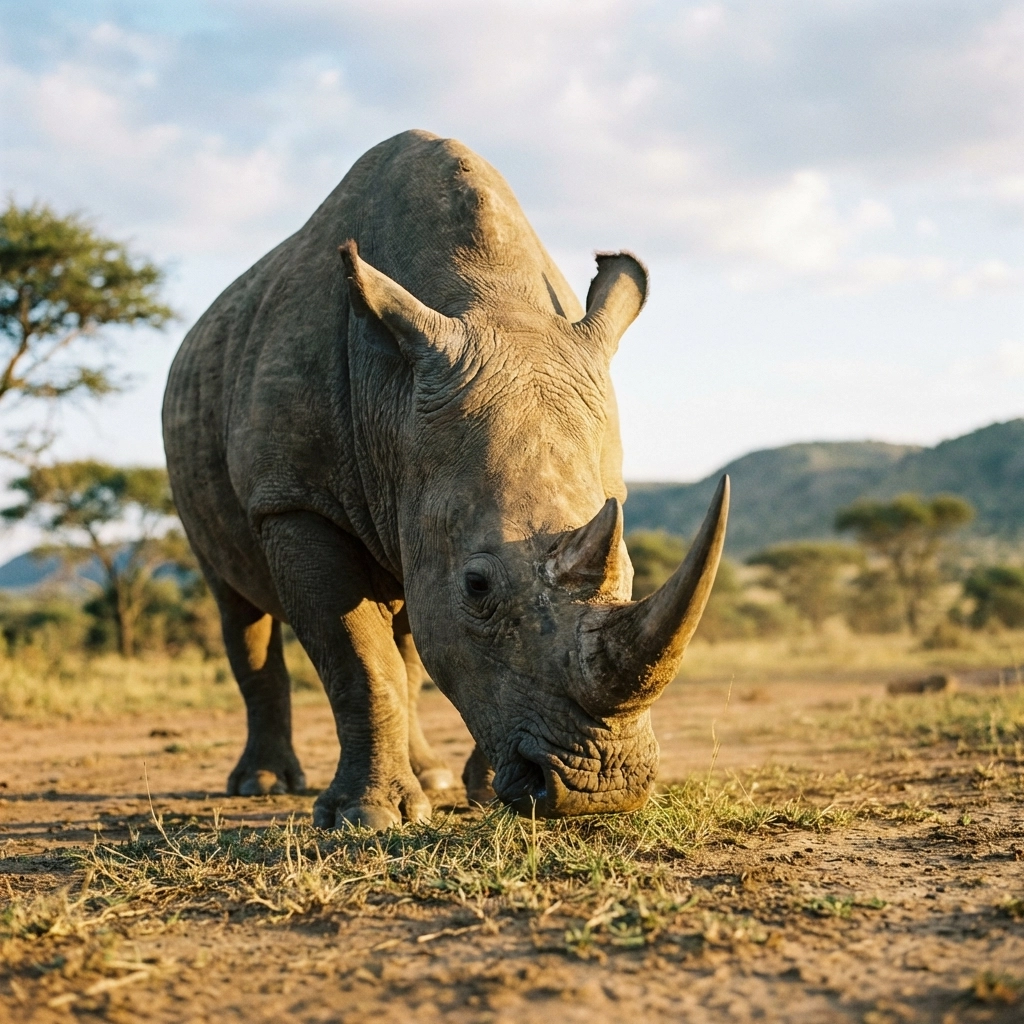
The white rhino recovery demonstrates conservation science at its finest. Operation Rhino captured and relocated 4,464 white rhino to 67 destinations across Africa between 1961-1995, establishing viable populations continent-wide. This program saved the subspecies from extinction while maintaining Hluhluwe iMfolozi as the primary breeding stronghold.
White rhino in Hluhluwe iMfolozi prefer the open grasslands of the iMfolozi section, particularly around Masinda Lodge area and the southern plains near Centenary Centre. Bulls weigh 2,000-2,500 kilograms while females average 1,500-1,800 kilograms, with distinctive square lips adapted for grazing short grass species.
The park's anti-poaching efforts employ 80+ field rangers working 24-hour rotations, supported by helicopter patrols and community conservation programs. Ezemvelo KZN Wildlife continues monitoring each individual rhino through identification databases tracking horn growth, territorial movements, and breeding success.
Current rhino viewing occurs throughout both sections, with highest success rates along the Wilderness Trail routes and the main roads between Nyalazi Gate and Mpila Camp during early morning drives.


Conservation Programs and Anti-Poaching Operations
Hluhluwe iMfolozi- Park maintains Africa's most comprehensive anti-poaching network, employing 80 field rangers across 96,000 hectares in partnership with Ezemvelo KZN Wildlife and international conservation organizations. The program operates 24-hour patrols using foot teams, vehicle units, and helicopter support targeting rhino poaching syndicates.
The park's conservation success extends beyond anti-poaching into community development programs affecting 15 neighboring communities. These initiatives include agricultural support, education programs, and employment opportunities that reduce human-wildlife conflict while building local support for conservation efforts.
Wildlife veterinarians conduct annual Big 5 population surveys using helicopter darting techniques for health assessments and GPS collar deployment. This monitoring data tracks individual animals, migration patterns, and population dynamics essential for adaptive management strategies.
Research partnerships with universities worldwide contribute ongoing studies of Big 5 behavior, genetics, and ecosystem relationships. The park serves as a living laboratory where conservation techniques developed in Hluhluwe iMfolozi spread to protected areas across Africa.


Practical Big 5 Viewing Strategy
Successful Big 5 sightings in Hluhluwe iMfolozi require strategic timing and location selection based on seasonal animal behavior patterns. The dry season months from May through September provide optimal viewing conditions with animals concentrating around water sources and reduced vegetation density improving visibility.
Morning drives departing between 06:00-07:00 from Mpila Camp or Hilltop Camp offer the highest success rates for lion and leopard activity. These predators remain active during cool morning temperatures before seeking shade during midday heat exceeding 30°C.
The Sontuli Loop Road connecting both park sections provides excellent Big 5 diversity, passing through multiple habitat zones where different species concentrate. Buffalo herds frequent the open grasslands visible from elevated sections, while elephant families use the riverine areas along drainage systems.
Afternoon drives starting around 15:00 coincide with increased animal movement as temperatures cool below 25°C. The late afternoon golden light between 16:00-18:00 provides optimal photography conditions while animals become more active before nightfall.
Hluhluwe iMfolozi Park safaris with experienced guides increase Big 5 sighting success through local knowledge of territorial ranges, behavioral patterns, and real-time animal movement tracking via radio communication networks.
Self-drive visitors should maintain 25-kilometer-per-hour speed limits, carry binoculars for distant sightings, and allow 6-8 hours for comprehensive Big 5 searches covering both park sections through the connecting corridor.
The park's three accommodation options: Mpila Camp, Hilltop Camp, and Nselweni Bush Camp: provide strategic bases for multi-day Big 5 viewing expeditions, with each location offering unique access to different species concentration areas.
Conclusion: Discovering the magnificence of Africa's Big 5 game animals
In conclusion, the journey to discover Africa's Big 5 game animals is not just about witnessing their majestic presence; it's about understanding the intricate web of life that supports these incredible species. From the regal lion to the gentle elephant, the powerful buffalo, the elusive leopard, and the endangered rhino, each animal plays a vital role in their ecosystem. As we explore their behaviors, habitats, and the challenges they face, we gain a deeper appreciation for the beauty and complexity of the natural world.
Conservation efforts are paramount in ensuring that these iconic animals continue to roam the African landscapes for generations to come. By supporting sustainable practices and engaging with local communities, we can contribute to the preservation of not only the Big 5 but also the diverse ecosystems they inhabit. The interconnectedness of wildlife and human communities is a reminder of our shared responsibility to protect the planet's natural treasures.
As you embark on your journey to witness the magnificence of Africa's Big 5, remember that each encounter is a unique privilege. The memories created in the presence of these extraordinary animals will stay with you long after your adventure ends. Let this guide inspire you to explore, appreciate, and advocate for the incredible wildlife that calls Africa home.