
Ultimate Guide to Hluhluwe iMfolozi Park
A comprehensive resource for exploring this stunning wildlife reserve.
- Where Operation Rhino Changed Conservation Forever
- Two Ecosystems, One Reserve
- Three Camps, Three Experiences, Hilltop, Mpila, Nselweni
- Planning Your Visit: Timing and Logistics
- Wildlife Encounters: Setting Realistic Expectations
Some Facts Before You Visit
Malaria-free during winter months (May-September) with virtually guaranteed white rhino encounters in Africa's oldest proclaimed game reserve, established in 1895.
Expect close encounters with 1,600 white rhinos: 15% of the global wild population: plus buffalo herds, forest-dwelling nyala, and all Big Five species across 96,000 hectares.
Experience two distinct ecosystems: Hluhluwe's forested ridges and steep valleys in the north, connected to iMfolozi's open grasslands and river systems in the south.
Walk through territories where Operation Rhino saved the white rhino from extinction between 1961 and 1972, relocating 4,000 individuals to establish populations worldwide.
Accommodation Options and Safari Packages
- Choose from self-drive safaris or wilderness trails, staying at Hilltop's full-service chalets, Mpila's self-catering camp where hyenas call at night, or remote Nselweni Bush Camp with no electricity.
- Want to experience Hluhluwe-iMfolozi On A Multy Day Safari We have ready-made safari packages or we'll help you plan your visit.
This Ultimate Guide To Hluhluwe iMfolozi Game Reserve, Also Includes Information On Local Wildlife You May See And Conservation Efforts
This Is What Its Like To Stay In The Phenomenal Wildlife Sanctuary Hluhluwe iMfolozi-Park
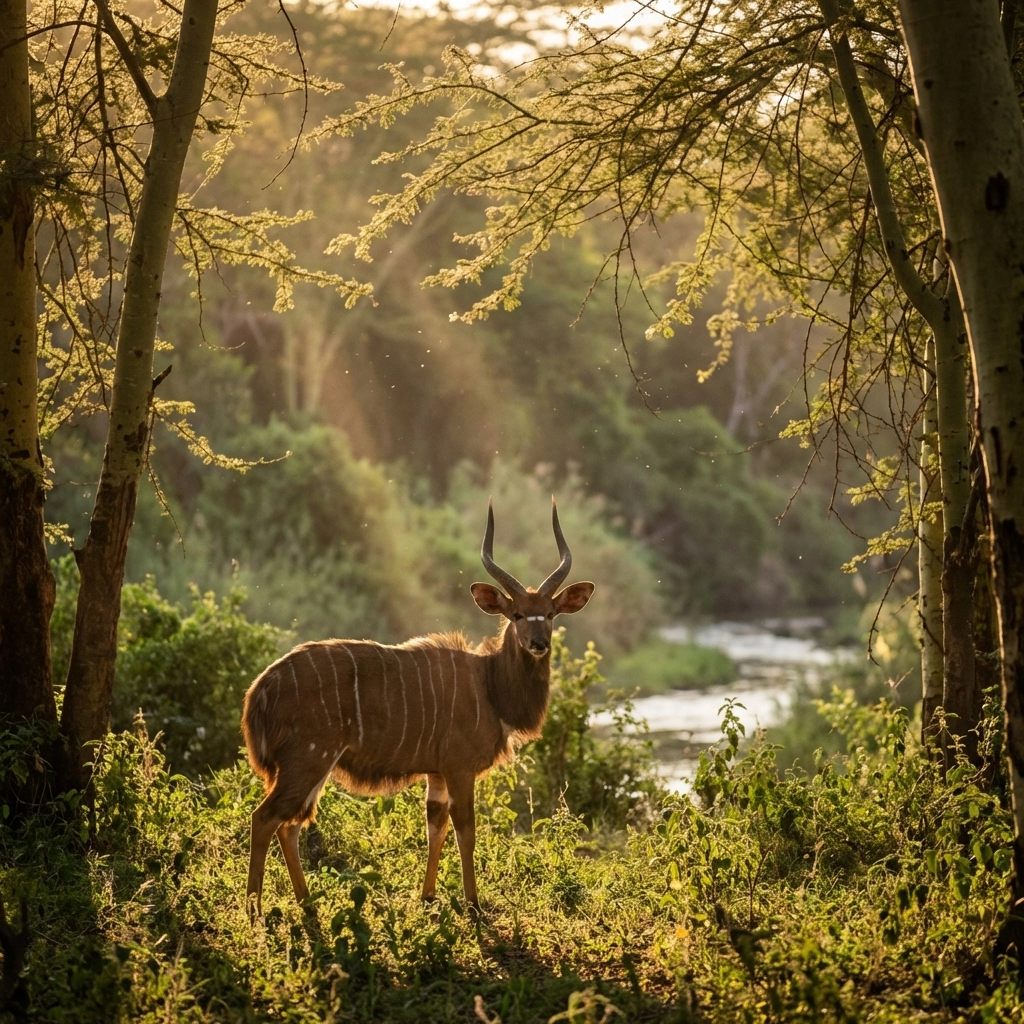
Dawn light filters through the canopy of fever trees along the Hluhluwe River, turning morning mist into sheets of gold. A nyala bull freezes mid-step at the sound of an approaching vehicle, his spiral horns catching the horizontal light that penetrates the forest understory. This northern section of Hluhluwe-iMfolozi Game Reserve: characterized by steep ridges and deep valleys: holds different wildlife than the open grasslands of iMfolozi to the south, just 20 kilometers away through the restored corridor.
The yellowish bark of the fever trees seems to glow against darker foliage, a quality that led early settlers to associate these trees with malaria. They believed the luminous appearance indicated fever-causing vapors rising from the soil. Today, visitors to Hluhluwe-iMfolozi face negligible malaria risk during winter months, when most wildlife viewing occurs under perfect conditions.
Read more in our ultimate guide to Hluhluwe iMfolozi Park to learn about seasonal wildlife behaviors.
Ultimate Guide to Hluhluwe iMfolozi Park
Where Operation Rhino Changed Conservation Forever
Understanding conservation is key in our ultimate guide to Hluhluwe iMfolozi Park.
The reserve's two sections tell the story of conservation's greatest success. Established separately in 1895 as the last refuge for fewer than 100 white rhinos in South Africa, Hluhluwe and iMfolozi operated independently for nearly a century. Colonial hunting had decimated rhino populations across the continent, leaving these scattered individuals as the species' final hope.
In 1961, Ian Player: the reserve's warden: and his Zulu colleague Magqubu Ntombela pioneered techniques for capturing and relocating rhinos that became the template for wildlife conservation worldwide. Operation Rhino relocated 4,000 white rhinos between 1961 and 1972, establishing viable populations in parks and private reserves across Africa that had lost their rhino populations decades earlier.
Learn how Operation Rhino is detailed in the ultimate guide to Hluhluwe iMfolozi Park.
The circular bomas: enclosures built for holding captured rhinos before translocation: remain visible today as earthwork circles reclaimed by vegetation in the iMfolozi thornveld. When you drive past these sites during a game drive, you're witnessing the birthplace of modern wildlife management techniques now used on every continent.
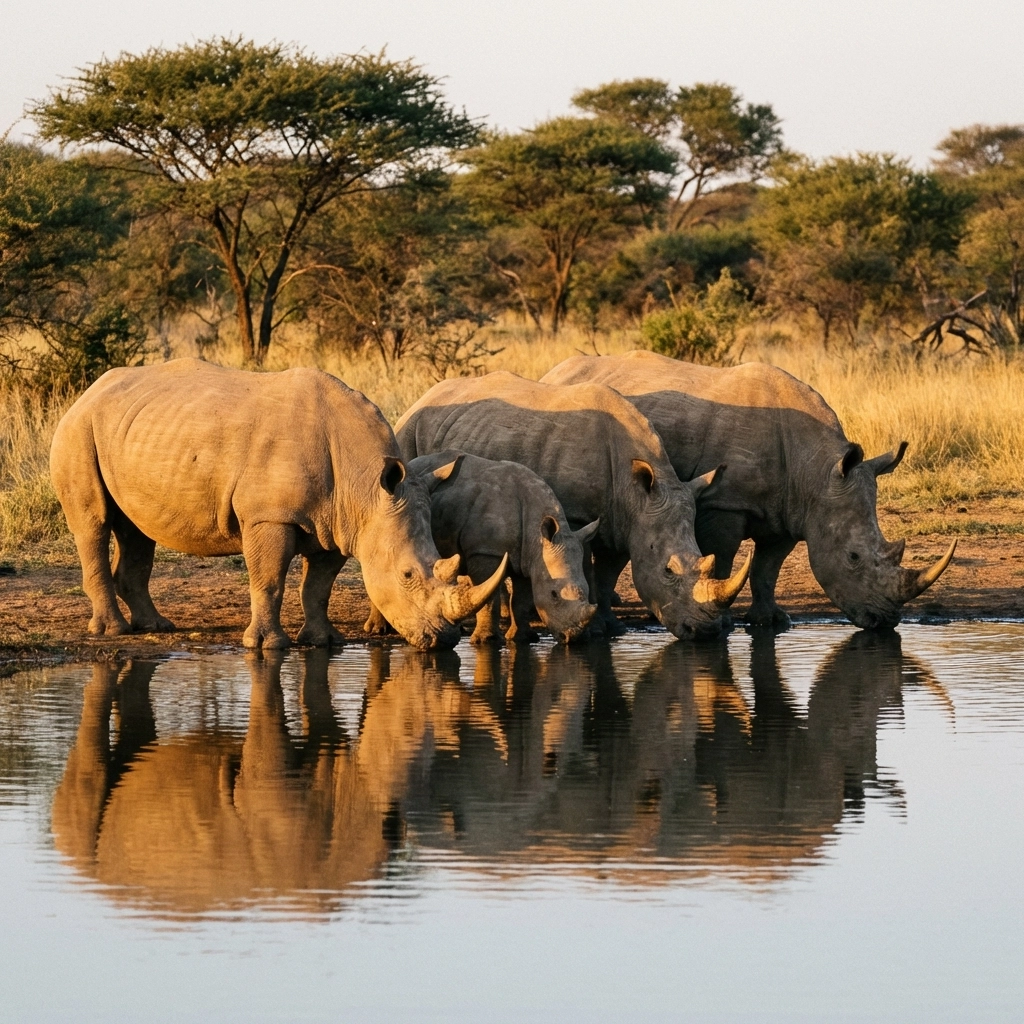
Today, Hluhluwe-iMfolozi supports approximately 1,600 white rhinos across its 96,000 hectares. At Mpila Camp's waterhole in iMfolozi, rhinos arrive predictably between 3 and 5pm during dry winter months, often five or six at once, approaching cautiously before drinking. Their wide square lips: adapted for cropping short grass rather than browsing: distinguish them from their hook-lipped black rhino cousins, though both species thrive here.
This aspect is crucial in the ultimate guide to Hluhluwe iMfolozi Park, focusing on rhino conservation.
Ultimate Guide to Hluhluwe iMfolozi Park
Two Ecosystems, One Reserve
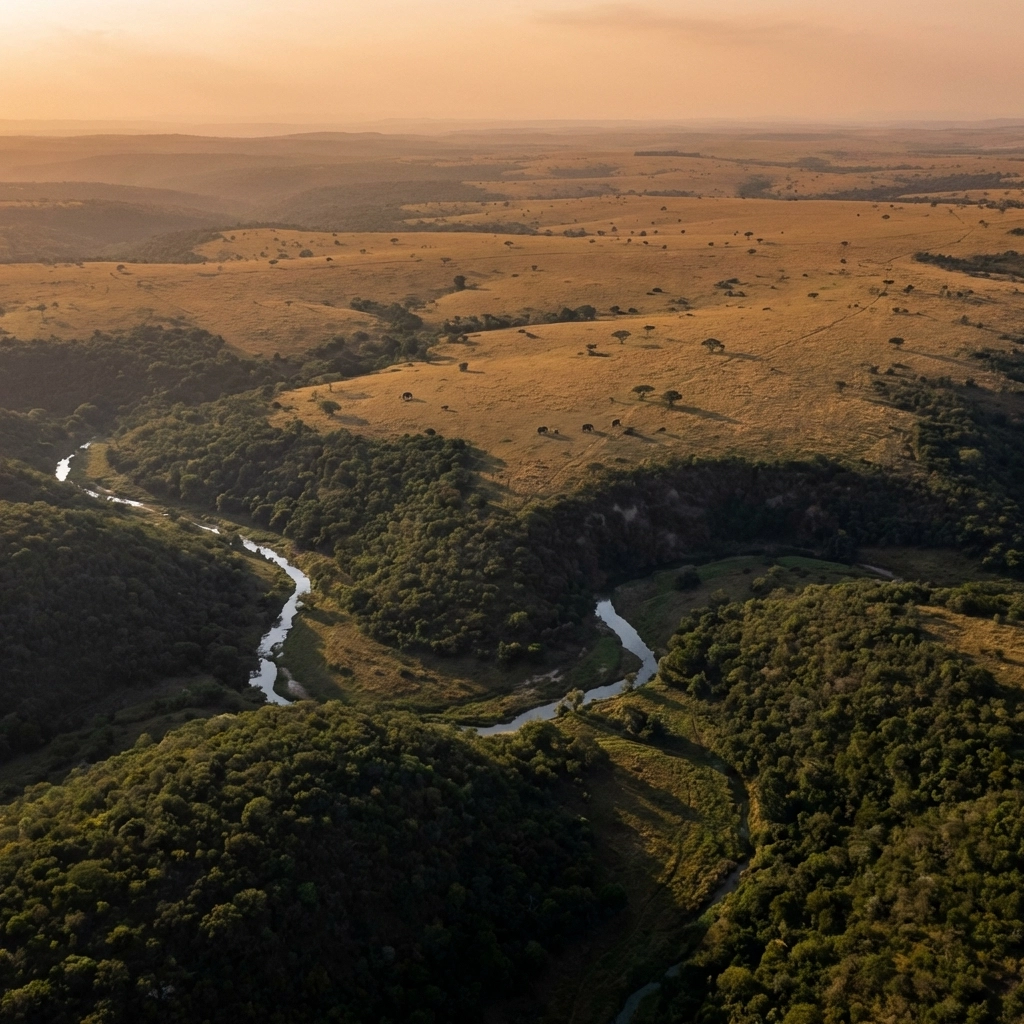
The 1989 restoration of the corridor between Hluhluwe and iMfolozi reconnected migration routes that had been severed for nearly a century. This 20,000-hectare link transformed the reserve from two separate parks into a single ecosystem where wildlife moves freely between forest and grassland habitats.
Explore the ecosystems further in the ultimate guide to Hluhluwe iMfolozi Park.
Hluhluwe's northern section rises to ridges at 450 meters elevation, covered in indigenous forest that shelters nyala, bushbuck, and duiker. These forest specialists emerge from riparian thickets along the Hluhluwe River at dawn and dusk to feed in natural clearings. The nyala's alarm call: a sharp, dog-like bark: often alerts visitors to leopards moving through the dense understory where sightings remain rare despite a healthy population.
Our ultimate guide to Hluhluwe iMfolozi Park, provides insights into Hluhluwe iMfolozi accommodation options.
iMfolozi's southern grasslands support different species entirely. Buffalo herds ranging from 50 to 300 individuals concentrate along the White and Black uMfolozi rivers during winter's dry season, where perennial pools provide both water and lush grazing. Summer dispersal sees herds fragment into smaller bachelor groups and breeding herds as seasonal water becomes available across the reserve.
The contrast becomes evident when you drive from Hilltop Camp through the forested valleys of Hluhluwe, then emerge into iMfolozi's open thornveld where visibility extends for kilometers. Each ecosystem supports distinct bird communities: the Hluhluwe River floodplain remains one of few places in South Africa where yellow-throated longclaw, rosy-throated longclaw, and Cape longclaw occur together.
Birdwatching is highlighted in the ultimate guide to Hluhluwe iMfolozi Park.
Three Camps, Three Experiences, Hilltop, Mpila, Nselweni
Your accommodation choice at Hluhluwe-iMfolozi shapes your entire safari experience. Each camp offers different levels of comfort, wildlife encounters, and wilderness immersion.
Choose the right camp with tips from the ultimate guide to Hluhluwe iMfolozi Park.
Hilltop Camp sits on a ridge at 450 meters elevation in the Hluhluwe section, with views extending north across 30 kilometers of forested hills to the Ubombo Mountains.
The camp operates as a full-service facility with restaurant, pool, and chalets featuring en-suite bathrooms, making it accessible for families and first-time safari visitors.
Bush braai areas provide outdoor cooking options while vervet monkeys watch from nearby trees. The elevated position places you above the tree-line, where summer thermals bring raptors circling past the deck at eye level.
Mpila Camp in the iMfolozi section takes a different approach entirely. Self-catering chalets and safari tents face the White uMfolozi River valley, where buffalo herds cross at dawn and dusk.
The camp has no restaurant: you bring your own food and cook at individual braai stands or the communal kitchen facility. After dark, spotted hyenas emerge from drainage lines to investigate the camp perimeter,
their distinctive whooping calls echoing across the river valley as they communicate with clan members. Genets hunt in the rafters above outdoor cooking areas, completely unbothered by human activity below.
We emphasize unique experiences in this ultimate guide to Hluhluwe iMfolozi Park.
Ultimate Guide to Hluhluwe iMfolozi Park
Nselweni Bush Camp, the most remote option: requires a four-wheel-drive approach through 12 kilometers of rough track and operates without electricity. Four thatched cottages accommodate eight guests maximum,
creating a wilderness experience closer to true bush camping than conventional accommodation. Lion roaring carries clearly from territories along the Black Mfolozi,
just two kilometers south of camp. The simplicity and isolation appeal to photographers and experienced safari visitors who prioritize wilderness immersion over convenience.
For those seeking adventure, the ultimate guide to Hluhluwe iMfolozi Park is your go-to resource.
All three camps are booked threw us, Here
School holidays and long weekends fill months in advance, while weekday availability often exists even during peak seasons.
Conservation fees are included in accommodation rates, contributing directly to anti-poaching operations and infrastructure maintenance.
Planning Your Visit: Timing and Logistics
Plan your visit based on our ultimate guide to Hluhluwe iMfolozi Park.
Hluhluwe-iMfolozi's location 280 kilometers north of Durban places it within a manageable three-hour drive via the N2 highway.
Memorial Gate: the main entrance to Hluhluwe: sits 13 kilometers west of Hluhluwe village on the R618 road.
St Lucia, at the southern entrance to iSimangaliso Wetland Park, lies 40 kilometers east, making it simple to combine coastal and savanna experiences.
Gates open at 5am during summer months (October-March) and 6am in winter (April-September), closing at 7pm and 6pm respectively.
Rangers enforce closure times strictly: arriving after hours incurs a R500 late entry fee that funds after-hours security operations.
Logistics are covered in the ultimate guide to Hluhluwe iMfolozi Park, making planning seamless.
Winter months bring dry conditions and cooler temperatures ranging from 10°C at dawn to 25°C by afternoon. Grass stays short from lack of rain and grazing pressure, dramatically improving game visibility.
Trees lose leaves in thornveld areas, further opening sightlines across the landscape. Wildlife concentrates predictably at permanent water sources, making this the optimal season for first-time visitors.
Summer rains between October and March green the landscape and trigger breeding behaviors across species, with young antelope, zebra, and giraffe appearing from November onward.
However, summer also brings afternoon thunderstorms that temporarily close roads, thick vegetation that conceals animals, and midday heat that keeps wildlife inactive in shade.
Each season offers different advantages depending on whether you prioritize sightings, photography, or experiencing complete ecological cycles.
Understand seasonal changes through the ultimate guide to Hluhluwe iMfolozi Park.
Wildlife Encounters: Setting Realistic Expectations
White rhino sightings at Hluhluwe-iMfolozi approach certainty: the reserve's 1,600 individuals across 96,000 hectares create encounter opportunities multiple times daily.
Buffalo and elephant sightings occur regularly, particularly near water sources during dry months. Lion sightings average 2-3 times per week, with pride territories concentrated in the iMfolozi grasslands.
Leopard encounters remain rare despite a stable population, as these cats favor dense thickets and hunt primarily after dark. Wild dog sightings are exceptional: the small resident pack ranges across both sections unpredictably.
Wildlife encounters are best experienced, as highlighted in the ultimate guide to Hluhluwe iMfolozi Park.
The reserve's 340 bird species include forest specialists in Hluhluwe and grassland species in iMfolozi.
Morning and evening drives reveal the highest activity levels, when diurnal species overlap briefly with nocturnal hunters beginning their activities.
For a detailed overview, refer to the ultimate guide to Hluhluwe iMfolozi Park.
Self-drive safaris use the reserve's 300-kilometer road network, while guided game drives can be arranged on arrival at any camp.
Wilderness trails through iMfolozi require advance booking and moderate fitness levels, covering 42 kilometers over four days while moving camp nightly through territories where Operation Rhino teams once worked.
The fever trees along the Hluhluwe River still glow in morning light, much as they did when early conservationists recognized this landscape's irreplaceable value.
Today's visitors experience not just wildlife viewing, but immersion in conservation history that continues shaping wildlife management worldwide.
From the bomas where captured rhinos once awaited translocation to the camps where their descendants thrive, Hluhluwe-iMfolozi offers encounters with both wildlife and the dedicated efforts that saved them.
Finally, the ultimate guide to Hluhluwe iMfolozi Park offers a unique glimpse of conservation efforts.
Ready to explore where Africa's greatest conservation success story unfolds daily? We can help you choose the perfect camp and safari combination for your interests and experience level.
Be inspired by the ultimate guide to Hluhluwe iMfolozi Park, your key to adventure.
Frequently Asked Questions: Ultimate Guide to Hluhluwe iMfolozi Park
Park entrance requires payment of a conservation levy at the gate upon arrival. Fees vary between South African residents and international visitors:
| Visitor Type | Daily Rate |
|---|---|
| International Adult | R240 per person per day |
| International Child (under 12) | R120 per person per day |
| South African Adult | R120 per person per day |
| South African Child (under 12) | R60 per person per day |
Overnight accommodation guests pay the conservation levy once daily for the duration of their stay. These fees fund anti-poaching operations, infrastructure maintenance, and wildlife conservation programs managed by Ezemvelo KZN Wildlife.
Gate times vary seasonally to maximize visitor access during wildlife activity periods:
Summer Season (November - February):
- Gates open: 05:00
- Gates close: 19:00
Transitional Months (March - April, October):
- Gates open: 06:00
- Gates close: 18:00
Winter Season (May - September):
- Gates open: 06:00
- Gates close: 17:00
Gate times are strictly enforced for both entry and exit. Visitors remaining in the park after closing time without overnight accommodation booking face substantial fines.
The park's location in northern KwaZulu-Natal provides access from multiple entry points:
From Durban:
- Distance: 280 kilometers (approximately 3 hours driving time)
- Route: N2 highway north, exit at Mtubatuba or Hluhluwe village
- Road conditions: Tarred national highway, excellent condition
From Johannesburg:
- Distance: Approximately 500 kilometers (6 hours driving time)
- Route options: Via N2 through KwaZulu-Natal, or through Eswatini (requires border crossing)
From St Lucia (iSimangaliso Wetland Park):
- Distance: 54 kilometers from Nyalazi Gate (40 minutes)
- Popular combination for coastal and savanna safari experiences
Park Access Gates:
- Memorial Gate: Northern Hluhluwe section, 13km west of Hluhluwe village on R618
- Nyalazi Gate: Central access between both sections, off R618 from Mtubatuba
- Cengeni Gate: Southern iMfolozi section, western approach from Nongoma
Operation Rhino represents conservation history's most successful species recovery program, transforming Hluhluwe iMfolozi into the birthplace of modern wildlife translocation techniques.
Historical Context: By 1895, fewer than 100 white rhinos survived globally, confined to the newly established Hluhluwe and iMfolozi reserves. Colonial hunting had decimated the species across the continent, making these scattered individuals Africa's last white rhino population.
The Operation (1961-1972): Reserve warden Ian Player and his Zulu colleague Magqubu Ntombela pioneered capture and relocation techniques that became the template for worldwide wildlife conservation. The operation successfully relocated 4,000 white rhinos to establish viable populations in parks and reserves across Africa that had lost their rhino populations decades earlier.
Modern Impact: Today, Hluhluwe iMfolozi supports approximately 1,600 white rhinos across its 96,000 hectares—representing 15% of the global wild population. The reserve's population continues supplying rhinos for translocation programs worldwide.
The techniques developed at Hluhluwe iMfolozi for chemical immobilization, transport, and establishment of breeding populations now serve as standard protocols for endangered species conservation on every continent.
Hluhluwe iMfolozi permits self-drive safaris throughout its 300-kilometer road network, making it accessible for independent travelers with rental vehicles or personal cars.
Self-Drive Advantages:
- Complete control over timing and duration at wildlife sightings
- Freedom to explore at personal pace without group schedules
- Cost-effective option for budget-conscious travelers
- Ability to return to productive locations multiple times
Road Network Details:
- One main tarred road connects north and south sections
- Multiple gravel loop roads in excellent condition (suitable for 2WD vehicles)
- Limited 4x4-only routes in iMfolozi section (Okhukho Loop west of Bhjane Hide)
- Maximum speed limit: 40 km/h (25 mph) throughout park
Guided Safari Options: While self-drive succeeds for experienced safari visitors, guided game drives offer advantages including:
- Expert knowledge of animal behavior and current sighting locations
- Radio communication network between guides for real-time wildlife updates
- Higher vantage point in open safari vehicles for better visibility
- Educational context about ecology, conservation, and animal behavior
- Ability to focus on wildlife observation rather than navigation and driving
Guided game drives book on arrival at camp reception (first-come, first-served basis). Half-day and full-day options available from both Hilltop and Mpila camps.
The park's two sections offer distinctly different landscapes, vegetation, and wildlife experiences despite being connected since 1989:
Hluhluwe Section (Northern):
- Size: 24,000 hectares
- Topography: Steep ridges and deep valleys, elevation reaching 450 meters
- Vegetation: Indigenous coastal forest, riparian thickets, fever tree groves
- Characteristic Wildlife: Nyala, bushbuck, duiker, forest-dwelling species
- Bird Life: Forest specialists, Yellow-throated longclaw at river floodplain
- Accommodation: Hilltop Camp with full-service facilities, restaurant, and pool
- Atmosphere: More developed infrastructure, family-friendly, elevated viewing opportunities
iMfolozi Section (Southern):
- Size: 72,000 hectares
- Topography: Open grasslands and rolling hills, lower elevation
- Vegetation: Acacia thornveld, open savanna, riverine corridors
- Characteristic Wildlife: Large buffalo herds (50-300 individuals), lion prides, white rhino concentrations
- Rivers: White and Black uMfolozi rivers with perennial pools
- Accommodation: Mpila Camp (self-catering), Nselweni Bush Camp (remote wilderness)
- Atmosphere: Wilder, less crowded, authentic bush experience
The contrast becomes dramatic when driving from Hilltop Camp through forested Hluhluwe valleys, then emerging into iMfolozi's open thornveld where visibility extends for kilometers across grassland plains.
Accommodation choice fundamentally shapes your safari experience. Each camp offers different levels of comfort, wildlife encounters, and wilderness immersion:
Hilltop Camp (Hluhluwe Section):
- Best for: Families, first-time safari visitors, those wanting modern conveniences
- Facilities: Full-service restaurant and bar, swimming pool, curio shop, fuel station
- Accommodation: Self-catering chalets (2-bed, 4-bed) with en-suite bathrooms, full kitchens, TV, Wi-Fi
- Safety: Fenced perimeter allows safe walking between units after dark
- Views: Elevated ridge position overlooking 30km of forested hills to Ubombo Mountains
- Power: Constant electricity via national grid
- Atmosphere: Comfortable, accessible, family-oriented
Mpila Camp (iMfolozi Section):
- Best for: Experienced safari visitors, wildlife enthusiasts, budget-conscious travelers
- Facilities: Self-catering only, communal kitchen, curio shop with basic supplies, fuel available
- Accommodation: Self-catering chalets (various sizes), safari tents, Masinda Lodge
- Safety: Unfenced camp—guests remain within unit parameters after sunset
- Wildlife: Buffalo cross river valley at dawn/dusk, spotted hyenas vocalize nightly around perimeter
- Power: Generator operation 07:00-22:00 daily (bush lodges 06:00-10:00, 17:00-22:00)
- Atmosphere: Authentic bush experience, wildlife proximity, self-sufficiency required
Nselweni Bush Camp (iMfolozi Section):
- Best for: Serious wilderness seekers, photographers, small groups seeking isolation
- Access: 4x4 required, 12km rough track from main road
- Facilities: Four thatched cottages, maximum 8 guests, cook/caretaker provided
- Power: No electricity—gas refrigeration, solar lighting only
- Wildlife: Lion roaring audible from territories 2km south along Black Mfolozi
- Atmosphere: Complete wilderness immersion, isolation, minimal impact camping experience
Hluhluwe iMfolozi sits within a designated low-risk malaria zone, with actual infection rates remaining negligible during winter months when most visitors travel to the park.
Risk Assessment by Season:
- Winter (May-September): Virtually malaria-free due to dry conditions, cool temperatures, and minimal mosquito activity. No recorded cases in recent years during this period.
- Summer (October-April): Low risk increases slightly during warm, humid conditions and after rainfall. Standing water provides mosquito breeding sites.
Medical Recommendations:
- Consult travel medicine physician or doctor 4-6 weeks before departure
- Individual risk assessment based on season, duration, and personal health factors
- Prophylactic medication optional for winter visits, consider for extended summer stays
- Standard precautions: insect repellent, long sleeves/pants during dawn and dusk
The coastal proximity means occasional mosquito presence year-round, but transmission risk remains substantially lower than Kruger National Park or other northern South African reserves. Most international travelers visiting during peak tourism season (May-September) proceed without antimalarial medication after medical consultation.
Hluhluwe iMfolozi is the only state-run park in KwaZulu-Natal where all Big Five species occur naturally. Sighting probabilities vary significantly by species and visitor effort:
White Rhino: 95%+ probability
- Population: Approximately 1,600 individuals (15% of global wild population)
- Sightings: Multiple encounters daily, often 5-6 individuals simultaneously at waterholes
- Best locations: Mpila waterhole (3-5pm during dry months), open grasslands throughout iMfolozi
- Behavior: Grazing in open areas, predictable afternoon watering patterns
Buffalo: 80%+ probability
- Population: Approximately 4,000 individuals in herds of 50-300
- Sightings: Regular encounters near water sources during dry season
- Best locations: White and Black uMfolozi river corridors, grassland areas both sections
- Behavior: Concentrated near water during winter, dispersed across park in summer
Elephant: 70%+ probability
- Population: Approximately 220 individuals in family groups of 6-15
- Sightings: Consistent encounters, particularly near Hilltop area where elephants visit daily
- Best locations: Riverine areas both sections, Hilltop Camp surrounds
- Behavior: Family groups move predictably between feeding and water sources
Lion: 30-40% probability
- Population: Small resident prides, primarily iMfolozi section
- Sightings: Average 2-3 times per week for multi-day visitors
- Best locations: iMfolozi grasslands, river confluence areas, Okhukho Loop
- Behavior: Most active dawn and dusk, often resting in shade during midday
Leopard: 10-15% probability
- Population: Stable but elusive, favor dense thickets
- Sightings: Rare despite healthy population, primarily nocturnal hunters
- Best locations: Hluhluwe forest edges at dawn, riverine thickets
- Behavior: Most secretive of Big Five, require luck and patience
Maximizing sighting success:
- Stay minimum 3-4 days to cover both sections and multiple time periods
- Enter gates at opening time (05:00 summer, 06:00 winter) for peak predator activity
- Focus on water sources during dry season (May-September) for concentrated wildlife
- Drive slowly (15-20 km/h) and spend extended time at productive locations
- Consider overnight stay inside park for unrestricted early morning and late evening access
Bonus species: Wild dogs occur in small packs (population fluctuates between 3-30 individuals) with exceptional sightings requiring considerable luck. Cheetah occur occasionally but remain extremely rare.
Optimal visit duration depends on safari experience level, wildlife priorities, and whether combining with other KwaZulu-Natal destinations:
Minimum Visit: 2 Days / 1 Night
- Covers either Hluhluwe or iMfolozi section (not both comprehensively)
- Allows one full day game driving plus arrival/departure morning sessions
- Suitable for travelers with limited time or combining with iSimangaliso Wetland Park
- White rhino and buffalo sightings highly probable, Big Five completion uncertain
Recommended Visit: 3-4 Days / 2-3 Nights
- Adequate time to explore both park sections thoroughly
- Multiple game drives covering different times of day and weather conditions
- High probability of all Big Five sightings except leopard
- Allows participation in guided walks or wilderness trail programs
- Opportunity to revisit productive locations and adjust strategy based on initial results
Comprehensive Visit: 5-7 Days / 4-6 Nights
- Complete coverage of both sections with repeat visits to prime areas
- Time for specialized activities: wilderness trails, night drives, photographic hides
- Opportunity for split stays (Hilltop + Mpila or Nselweni) experiencing different camps
- Best chance for elusive species: leopard, wild dog, cheetah
- Allows flexibility for weather adaptation and spontaneous opportunities
Extended Conservation Experience: 7+ Days
- Multi-day wilderness trails (4-day iMfolozi base camp trail, extended short trails)
- Deep immersion in ecology and conservation history
- Suitable for photographers requiring varied light conditions and seasonal moments
- Complete seasonal cycle observation (particularly valuable during transition periods)
Combination itineraries: Most visitors combine Hluhluwe iMfolozi with iSimangaliso Wetland Park (54km from Nyalazi Gate to St Lucia). Typical combinations include:
- 3 nights Hluhluwe iMfolozi + 2 nights St Lucia (savanna and coastal ecosystems)
- 2 nights iMfolozi + 2 nights Cape Vidal (Big Five and marine wildlife)
- 4 nights split between Hilltop and Mpila + 3 nights St Lucia (comprehensive regional experience)
Time management considerations: The park's 300km road network requires substantial driving time at the 40km/h speed limit. Budget approximately 5-6 hours daily for comprehensive game drives covering significant territory. Early morning sessions (gate opening until 10:00) and late afternoon sessions (15:00 until gate closing) provide optimal wildlife activity, with midday suitable for camp rest, guided walks, or photographic hide sessions.
Ready to Experience Hluhluwe iMfolozi Park?
Book your accommodation at Hilltop, Mpila, or Nselweni camps and discover where Operation Rhino saved the white rhino from extinction. We'll help you plan the perfect safari experience.